The year 2025 has been an extraordinary chapter in women’s cricket, and the fiercest rivalry that grabbed global attention was the battle between the Australia Women’s Cricket Team and the India Women’s Cricket Team. From thrilling contests to record-breaking performances, this rivalry showcased the true evolution of women’s cricket on the global stage.
As both teams clashed in major tournaments, including the ICC Women’s Cricket World Cup 2025, their encounters were not just matches — they were statements of intent, determination, and national pride. India, under Harmanpreet Kaur’s leadership, came face-to-face with the world’s most dominant side, led by Alyssa Healy, in a series of unforgettable games that defined the modern era of the sport.
This article explores in depth the 2025 showdown between Australia and India women’s teams, highlighting the background, match analysis, key performances, tactical insights, and what this rivalry means for the future of women’s cricket.
1. Historical Background of the Rivalry
The rivalry between India Women and Australia Women has been among the most intense in the history of women’s cricket. Over the years, Australia’s dominance has been clear — with multiple World Cup titles and an unmatched winning record. However, India’s rise since 2017 has changed the landscape dramatically.
India, known for its flair, passion, and unpredictability, has consistently challenged Australia’s supremacy in global tournaments. Matches between these two sides often attract record viewership and become defining moments in world cricket.
Australia boasts players like Ellyse Perry, Meg Lanning, Alyssa Healy, and Beth Mooney, while India counters with the brilliance of Smriti Mandhana, Harmanpreet Kaur, Jemimah Rodrigues, and Deepti Sharma. Each encounter has produced electrifying cricket that has pushed both teams to their limits.
2. Build-Up to the 2025 Series and World Cup Encounter
Leading into 2025, both teams were in exceptional form.
Australia Women entered the year as the defending World Cup champions, having won the 2022 edition with a commanding performance.
India Women, after consistent performances in bilateral series and the Women’s Premier League (WPL), had found a new balance of youth and experience.
The anticipation for the 2025 ICC Women’s World Cup, hosted in India, was immense. Fans packed stadiums across the country as India eyed their first-ever World Cup victory on home soil. When the fixtures revealed that India and Australia could potentially meet in the semifinals, the cricketing world knew something special was coming.
3. The 2025 ICC Women’s World Cup Semifinal – A Defining Clash
Venue and Atmosphere
The second semifinal between India and Australia was held at the DY Patil Stadium, Navi Mumbai, on 30 October 2025. The electric crowd of over 50,000 fans created an atmosphere rarely seen in women’s cricket — a celebration of passion, color, and unity.
Both teams entered the field knowing what was at stake: a place in the final and the chance to etch their name in history.
Australia’s Batting Brilliance
Winning the toss, Alyssa Healy chose to bat first. The decision proved golden. Australia’s openers, Phoebe Litchfield and Beth Mooney, laid a solid platform with an aggressive 100-run stand. Litchfield’s innings was the highlight of the day — a magnificent 119 off 98 balls, featuring elegant drives, fearless pulls, and perfect timing.
Ellyse Perry added a crucial 68, guiding Australia to a formidable total of 338 runs. Despite strong spells from Renuka Singh and Deepti Sharma, India’s bowlers struggled to contain Australia’s depth in batting.
India’s Chase and Heroic Resistance
Chasing 339 was always going to be a monumental task, but India didn’t back down.
Smriti Mandhana started fluently, hitting boundaries off the new ball. However, early wickets of Mandhana and Shafali Verma pegged India back. The innings then stabilized through Jemimah Rodrigues (74) and Harmanpreet Kaur (89), who crafted a superb partnership that reignited Indian hopes.
At one stage, India were 210/3, needing 129 runs off the last 15 overs. The crowd roared as Harmanpreet smashed boundaries across the park, replicating her fearless knock from the 2017 World Cup semifinal. But a crucial run-out and Australia’s tight death bowling turned the tide once again.
India eventually fell short by 32 runs, finishing at 306/9, but they won hearts for their spirited fight.
4. Key Performances and Turning Points
Phoebe Litchfield – The Game Changer
Litchfield’s century was a masterclass in controlled aggression. At just 22, she anchored the innings with maturity beyond her years. Her ability to rotate strike, punish bad balls, and handle spin was key in building Australia’s big total.
Harmanpreet Kaur – The Heart of Indian Resistance
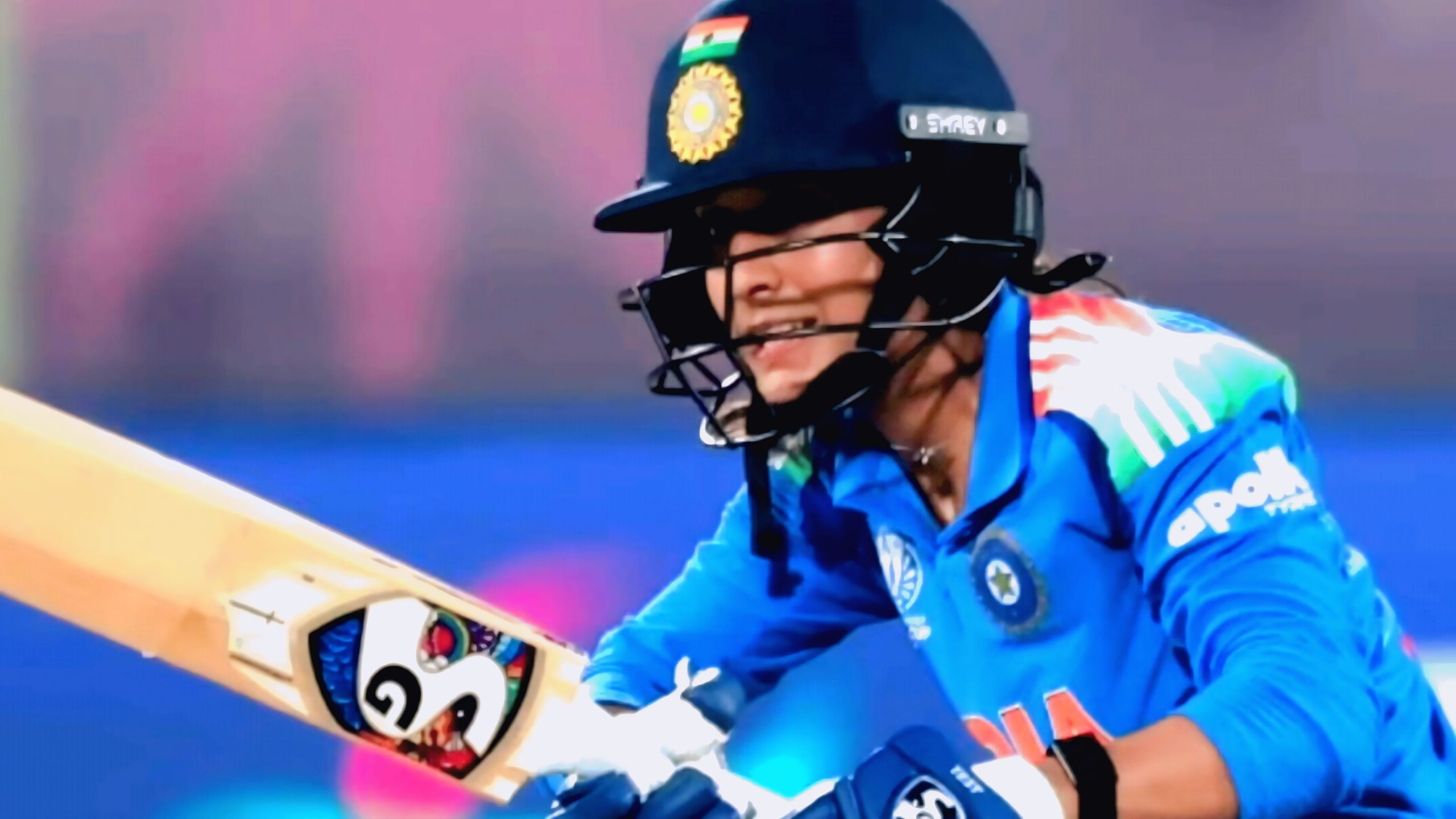
Harmanpreet’s leadership and fighting knock were inspirational. Her 89 off 82 balls reminded fans of her 171* against Australia in 2017. Once again, she carried India’s hopes, battling both the scoreboard pressure and Australia’s experienced attack.
Alyssa Healy’s Captaincy
Healy’s strategic captaincy stood out — from rotating bowlers smartly to setting attacking fields against India’s middle order. Her decision to bring in Ashleigh Gardner during the middle overs broke crucial partnerships.
Renuka Singh’s Bowling
Renuka Singh’s opening spell was fiery, swinging the ball both ways and dismissing Healy early. Though she went wicketless later, her discipline with the new ball kept India competitive in the first powerplay.
5. Tactical Analysis
The semifinal was not just a contest of skills but also of strategies.
Australia’s Plan: Attack India’s new-ball bowlers early, build a big platform, and control the middle overs with spin.
India’s Plan: Use spinners like Deepti Sharma and Rajeshwari Gayakwad to slow down scoring and rely on middle-order partnerships to chase.
While both plans were well-executed, Australia’s fielding brilliance and disciplined bowling at crucial stages made the difference. The fitness levels and intensity Australia displayed once again showcased why they remain the benchmark in women’s cricket.
6. The Emotional Impact and Sportsmanship
The match wasn’t just about runs and wickets — it was an emotional rollercoaster. The Indian crowd stood up and applauded Australia’s win, while Australian players hugged Indian batters in respect. Harmanpreet’s teary post-match moment reflected the heartbreak of coming so close yet again.
But for millions of fans, India’s performance symbolized progress, resilience, and belief. It was proof that Indian women’s cricket had come of age, capable of standing toe-to-toe with the world’s best.
7. Post-Match Reactions
Alyssa Healy (Australia Captain): “It was one of the toughest matches we’ve played. Credit to India — they pushed us harder than anyone this tournament.”
Harmanpreet Kaur (India Captain): “We gave it everything. Australia played better today, but I’m proud of how far we’ve come as a team.”
Ellyse Perry: “India are improving rapidly. Every time we play them, it feels like the gap gets smaller.”
Experts worldwide agreed that the India–Australia rivalry is now the most thrilling matchup in women’s cricket, surpassing even England–Australia in excitement.
8. What This Rivalry Means for Women’s Cricket
The India vs Australia rivalry has transformed the landscape of women’s cricket. It symbolizes the rise of global competitiveness and the breaking of traditional dominance.
It has increased global viewership, bringing millions of new fans to women’s cricket.
The Women’s Premier League (WPL) has helped Indian players gain confidence against Australian stars.
The rivalry has pushed both nations to invest more in domestic structures, ensuring a steady flow of young talent.
In essence, every India–Australia match is now a festival — an event that inspires young girls across continents to dream big.
9. The Road Ahead: What’s Next for Both Teams
For India Women
India will focus on strengthening their bowling attack and improving fielding standards. With emerging talents like Shreyansh Patil, Richa Ghosh, and Titas Sadhu, the future looks promising. Consistency in middle-order batting and finishing remains the key area of improvement.
For Australia Women
Australia’s challenge is to maintain dominance as the rest of the world catches up. Managing workload, grooming new leaders, and maintaining hunger after years of success will define their next phase.
Young stars like Litchfield, McGrath, and Brown are already leading that charge.
10. The Broader Legacy of the 2025 Encounter
This 2025 semifinal will be remembered as a landmark moment — not just for the thrilling cricket but for how it elevated women’s sports.
It proved that women’s cricket can fill stadiums, draw massive TV audiences, and produce world-class entertainment. The quality, competitiveness, and emotional depth of this match signaled that women’s cricket has truly arrived.
As the sport grows, this rivalry — India vs Australia — will remain its heartbeat, shaping its narrative for years to come.
Conclusion
The Australia Women vs India Women 2025 encounter was more than a game — it was a clash of pride, legacy, and the future. Australia’s victory reinforced their supremacy, but India’s fearless fight announced that the gap has never been smaller.
With every boundary, every wicket, and every roar from the crowd, the world witnessed the power of women’s cricket a game no longer defined by gender but by excellence.
As both teams look ahead to future series, one thing is certain: whenever India and Australia meet, the world will watch and women’s cricket will rise higher.